
"coffee farming Ethiopia"
3000 article(s) found

Ethiopia Red Cherry Project Xie Like Shilcho Cooperative G1 washed coffee beans Details
Professional barista exchanges, please pay attention to coffee workshop (Weixin Official Accounts qianjieccoffee) Ethiopia is the first country to discover coffee, and it is still the most important producing country and the best in terms of coffee quality and output. Most coffee is traditional Arabica, with an annual output of about 350,000 tons and more than 70% exported to all countries in the world. About 15 million people in China are engaged in coffee.

Introduction to the taste of Yega flavor in Ethiopia's Konga Wote Kongawat Sun
For the exchange of professional baristas, please follow the coffee workshop (Wechat official account cafe_style) Ethiopia Yegasuefei-Konga Wote Kongawat G3 sun-dried beans in Ethiopia will add 3 and 4 after the name to make a difference (with 3 better quality). After the coffee cherry is harvested, the peel and pulp will be dried in the bean drying farm immediately until the coffee is dried to 16% moisture.

A brief introduction to the market price of coffee cultivation in Ethiopian coffee farms with moderate acidity and alkalinity
Ethiopia produces between 200000 and 250000 tons of coffee each year. Today, Ethiopia has become one of the largest coffee producers in the world, ranking 14th in the world; the fourth largest coffee-growing villages in Africa account for about 35% of the country's total coffee production. These coffee farms, which use a multi-layer coffee planting system, get

Ethiopian Coffee | Rosa Village | Geli Rose Summer 1931 Sun auction lot # 26
Professional coffee knowledge exchange more coffee bean information please follow the coffee workshop (Wechat official account cafe_style) Ethiopia Rose Village Manor Geli Rose Summer Sun auction lot # 26 production country: Ethiopia Ethiopia production area: Benzi Maggie Bench Maji Zone SNNPR Region small production area: rose Summer Forest Gori Gesha Forest Manor: rose

Coffee beans suitable for hand flushing what coffee beans do you use by hand? Ethiopian Limtega and Tula.
Professional coffee knowledge exchange more coffee bean information please follow the coffee workshop (Wechat official account cafe_style) suitable for hand-brewed coffee beans recommended Property Characteristics: farm features Name name: Tega and Tula Farm Taiga and Tula farms Region producing area: Limu Country country: Ethiopia Ethiopia Grade level: G3 Al

Introduction of Cayong Mountain Manor and Coffee Flavor in Ethiopia
Founded in 2012, Kayon Mountain Farm Farm is located in the town of Odo Shakiso District in the Guji Zone district of Oromia State in southern Ethiopia, about 516km from the capital Addis Ababa. The total area of coffee planting is about 300ha, and the elevation is about 1900 meters.

Introduction of coffee farm in Ethiopia introduction of Ted Manor in Sidamo
From a historical point of view, coffee is closely related to the history and religious culture of Ethiopia. In ancient times, Ethiopia was called Abyssinia and Axum, which was ruled by the Solomon dynasty. According to literature, the Hamitic people of the Mitt nationality migrated from Asia minor to present-day Ethiopia, and the merchants of Semitic migrated from about seven BC.

Yega Xuefei G1 Oman small farmers micro-batch washing Godibe 008 Ethiopian boutique coffee
Professional coffee knowledge exchange more coffee bean information please follow the coffee workshop (Wechat official account cafe_style) Ethiopia Washed Yirgacheffe Gedeb G1 SFP Lot 008 country: Ethiopia production area: Godibe altitude: 1600: 2100m treatment: washing grade: G1 variety: original species Ethiopia Yega Xuefei G1 Oman small farmer micro

How is Ethiopian coffee traded? introduction to the price of Ethiopian coffee beans.
For more information on coffee beans, please follow coffee workshops (Wechat official account cafe_style) according to the Ethiopian decree, there are three coffee export systems, (1) the largest privately owned processing plant system for export through competitive ECX, (2) the cooperative system, and (3) the single farm system. In these three systems, cooperatives and single manors are not thorough.

Contribution and introduction of Ethiopia Yega Xuefei Haige skirt processing Plant to the producing area
Professional barista communication please pay attention to the coffee workshop (Wechat official account qianjiecoffee) the black plaid skirt processing plant is located in the famous Yega Xuefi producing area of Ethiopia. About 500 farmers hand over the coffee beans to the black plaid skirt cleaning station. Small farmers cultivate about 2.5 hectares, which is between 1850 and 1900 meters above sea level. Farmers must send the harvested coffee everywhere immediately.

Introduction to the flavor and taste of Ethiopian coffee beans grade classification of Ethiopian Sidamo coffee beans
Ethiopia has unique natural conditions suitable for growing all imaginable varieties of coffee. As a upland crop, Ethiopian coffee beans are mainly grown in areas between 1100 and 2300 meters above sea level, roughly distributed in southern Ethiopia. Deep soil, row

Introduction to the Flavor and Taste characteristics of Ethiopian Coffee Farm
Located in the most advantaged natural conditions, Ethiopia produces unique high-quality coffee every year. Ethiopia's coffee growing cycle brings the joy of harvest to the country every year. Beautiful white coffee flowers will bloom and bear fruit every year from March to April. Only the reddest and ripe fruits will be selected between September and December.
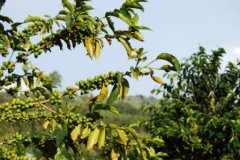
Grade G1 original species of snow caffeine from Worka estate in Waka, Ethiopia
Today, there are still a large number of wild Arabica coffee trees growing in many parts of Ethiopia, averaging between 4200 and 6800 feet above sea level. Now there is a trend of small cultivation, generally planting banana trees for shade at the same time, but due to lack of agricultural technology, herbicides and pesticides are less used. Coffee is Ethiopia's main economic crop and the largest in the country.

Coffee from Seka Forest Farm in Lim, Ethiopia. Is the coffee in Lim good?
Professional coffee knowledge exchange more information about coffee beans Please follow Coffee Workshop (Wechat official account cafe_style) Seka Forest Farm the natives living in the surrounding area are mainly from the Oromo. They grow coffee on small plots of land and get natural resources from the surrounding forests. The farm covers an area of 200 hectares and is located in the Oromiya area of Checka kebele. it
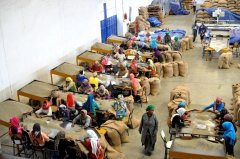
Ethiopian coffee trading system, coffee raw beans Sidamo sun [Sakuran] export system
According to the Ethiopian decree, there are three coffee export systems: (1) the largest private processing plant system that has been exported through ECX bidding; (2) the cooperative system; and (3) the single farm system. In these three systems, cooperatives and single manors can be exported directly without competitive bidding through ECX, which can be said to have completely reliable traceability / product resumes (traceability).

Ethiopian decaf & Organic Coffee Gucci-Saxcot carbon dioxide decaffeinated
Professional baristas Please follow the Coffee Workshop (Wechat official account cafe_style) Ethiopian Gujisakot decaffeinated this organic coffee is decaffeinated only with carbon dioxide, making this coffee 100% natural and recyclable. Suke Quto Farm was established in 2005, and the original idea was to preserve the conditions of native shady forests.

There are several coffee farms in Ethiopia's coffee-producing countries
Grade of Ethiopian coffee: Ethiopian washed coffee Yega Chuefei G1 G2 Sidamo (Yirgacheffe, Sidamo) has the highest grades 2 and 3 (G2, G3), while sun-processed coffee in eastern Ethiopia is mostly grade 4 or 5 (G4, G5). In many cases, level 4 coffee is marked as level 5 in order to reduce taxes. At present, the classification is not uniform and there are

Introduction to the description of Grinding scale Flavor of Coffee Variety produced by Coffee Farm in Ethiopia
Coffee is Ethiopia's most important export cash crop and the main source of Ethiopia's foreign exchange earnings. Ethiopia's coffee exports account for about 3% of the world market, making it the eighth largest coffee exporter in the world. Coffee exports increased steadily from 58000 tons in 1990 to 110000 tons in 1995-1996 and remained at this level in the following years. 2001-2002

Taste characteristics of fermented natural sun-cured Ethiopian coffee varieties introduction to the flavor of fine coffee beans in the manor
Ethiopia has unique natural conditions suitable for growing all imaginable varieties of coffee. As a upland crop, Ethiopian coffee beans are mainly grown in areas between 1100 and 2300 meters above sea level, roughly distributed in southern Ethiopia. Deep soil, well drained soil, weakly acidic soil, laterite and soil are soft and contain

Characteristics of Flavor description of planting Information of Ye Jia Xue Fei Aduo Coffee Bean
For the exchange of professional baristas, please follow the coffee workshop (Wechat official account cafe_style) yirgacheffe adado producing area of Ethiopia Yega Xuefei gedeo area, which is a cooperative made up of 7000 coffee farmers. Adado is the tribal name of the area, that is to say, Gedeo zone is one of the areas of the southern ethnic states of Ethiopia, Yega Xuefei and Koch.